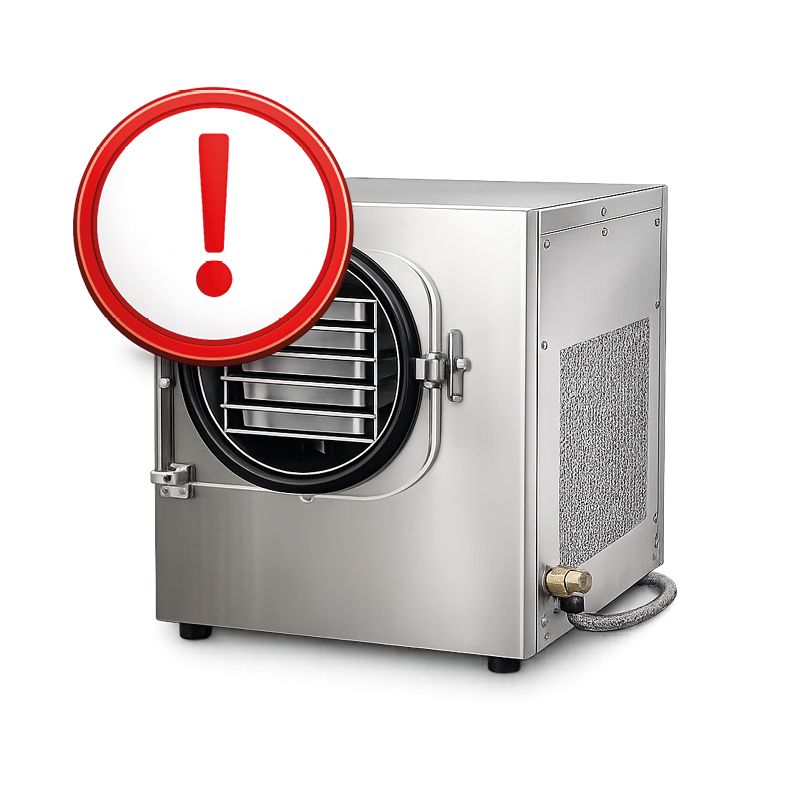
The Hidden Risks Behind Freeze Drying Equipment
Freeze dryers are complex systems combining:
- Vacuum technology
- Refrigeration systems
- Heating elements
- Electronic controls
This combination makes them highly effective—but also potentially hazardous if not properly engineered and tested.
Electrical compliance ensures:
- Safe operation under load
- Protection against overheating and faults
- Compatibility with local power systems
- Proper insulation and grounding
Without these safeguards, the risk of failure increases significantly.
Understanding CE Marking and HACCP in Freeze Drying
CE Marking: More Than a Label
In Europe, CE marking indicates that a product meets applicable directives related to electrical safety, machinery safety, and electromagnetic compatibility.
However, CE marking must be supported by proper documentation, including a Declaration of Conformity and technical file.
HACCP: Safety in Food Production
For food applications, compliance extends beyond machinery. HACCP (Hazard Analysis and Critical Control Points) ensures food safety by identifying and controlling risks throughout production.
Freeze drying equipment should support HACCP-based workflows through hygienic design and controlled processes.
👉 Read more:
Ensuring Food Safety Compliance in Freeze Drying: The Role of HACCP Certification

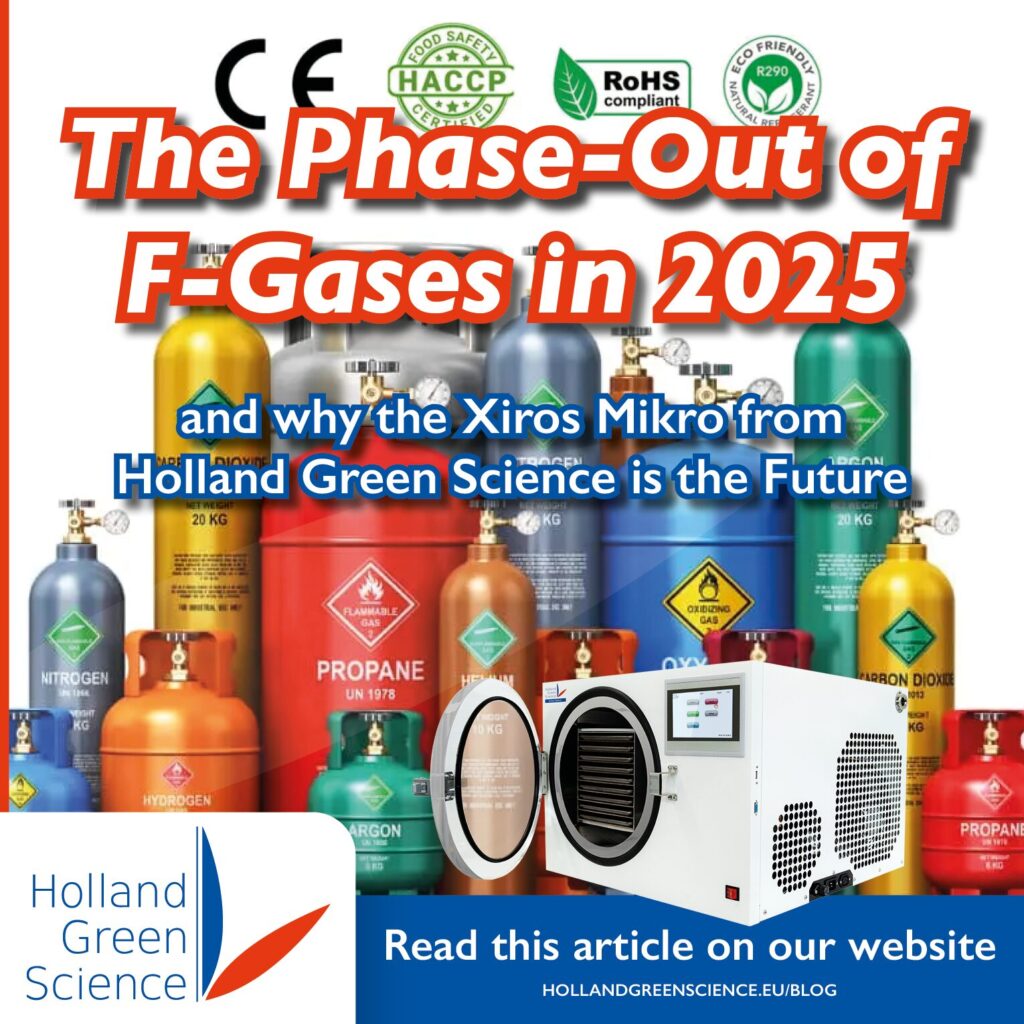
Refrigerants and Regulation: The Role Refrigerants and Regulation: The Role of R290
Another important aspect of compliance is the refrigerant used in freeze dryers.
With the EU phasing out F-gases, regulations are tightening. R290 (propane) is becoming a preferred alternative because it is:
- Environmentally friendly
- Energy efficient
- Future-proof under EU regulations
Not all manufacturers have adapted to these changes, which can lead to compliance risks.
👉 Learn more: Or The Phase-Out of F-Gases in 2025 or see European Commission Guidance on the EU’s F-gas Regulation
Consumer vs Professional Freeze Dryers
Home-use systems are designed for occasional use and lower volumes, while professional systems must deliver:
- Consistent performance
- Higher safety standards
- Reliable process control
- Integration into hygienic environments
Using consumer-grade equipment in professional settings can introduce safety and compliance risks.
What to Look for in a Compliant Freeze Dryer
1. Market-Specific Compliance
Ensure the system meets regulatory requirements in your region.
2. Designed for Professional Use
Equipment should be built for frequent operation and controlled cycles.
3. Built-In Safety Features
Look for monitoring systems, automatic shutdown, and overload protection.
4. Documentation and Transparency
Suppliers should provide technical specifications and compliance documentation.
Why Compliance Is a Business Decision
Non-compliant equipment introduces risks such as:
- Operational downtime
- Safety incidents
- Regulatory penalties
- Reputation damage
Investing in compliant equipment ensures long-term reliability and trust.
The Xiros Mikro Approach
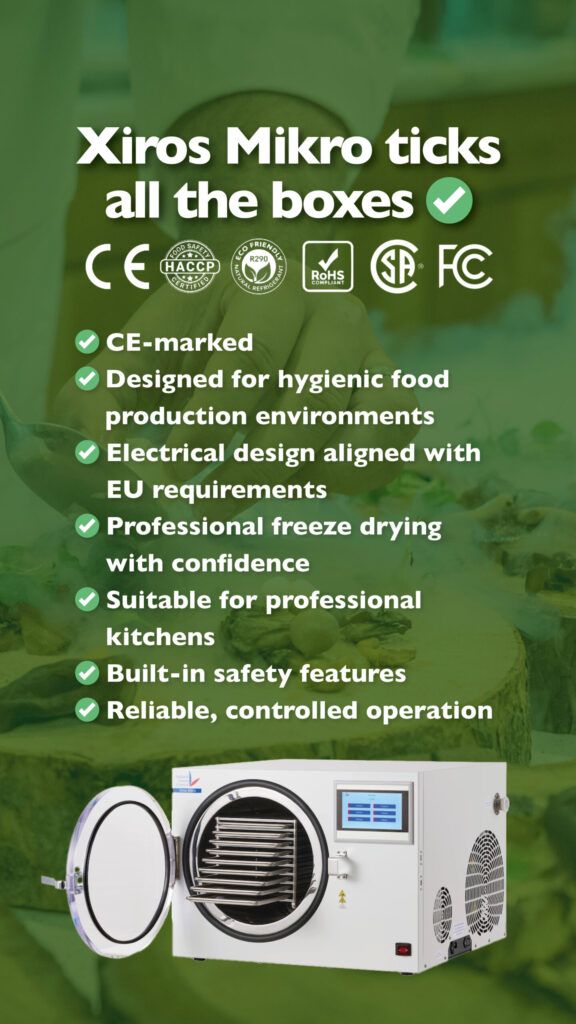
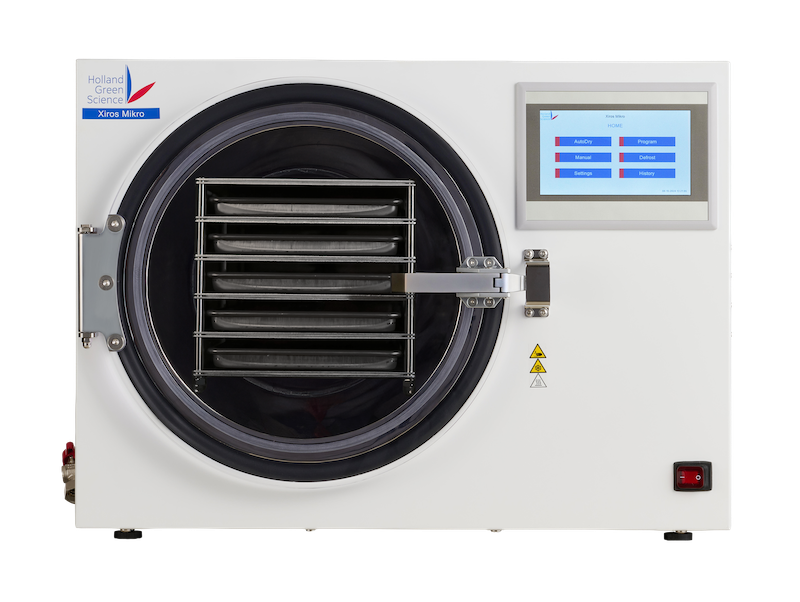
The Xiros Mikro freeze dryer is designed for professional environments, focusing on:
- Reliable, controlled operation
- Built-in safety features
- Suitability for hygienic food production
- Alignment with EU requirements
- Use of R290 refrigerant
This ensures safe, efficient, and future-proof freeze drying processes.
Conclusion: Safety First, Always
The key takeaway is simple:
Safety and compliance should never be assumed.
By choosing professional, compliant equipment, businesses can reduce risk, improve consistency, and operate with confidence.
Because in professional freeze drying, success is not just about output—but about safe and reliable performance.