Freeze Dryer for Home Use: Freeze-Drying at Home and in Professional Kitchens
The first time most people hear about freeze-drying, they often picture the wrong kitchen.
They imagine a machine made only for emergency food storage. Or for a lab. Or for someone who likes equipment more than cooking.
However, home freeze drying has become a cost-effective and accessible method for food preservation, evolving from industrial and laboratory use to specialized equipment designed for home kitchens. This historical development has made it easier for individuals to preserve a wide variety of foods at home, offering advantages over store-bought options in terms of quality, nutrition, and versatility.
Then they taste berry powder made from fruit picked at its best. Or open a jar of herbs months later and still catch that fresh, green aroma. Or realise that good ingredients can be stored for much longer without giving up the qualities that made them worth buying in the first place. Fresh food, especially homegrown or locally sourced produce, benefits most from freeze drying, as it allows you to preserve the peak quality of your ingredients right after harvest or preparation.
Freeze-drying is just one of several food preservation techniques—alongside fermenting, canning, and dehydrating—but it stands out for its ability to extend shelf life while maintaining nutritional quality, flavor, and texture better than most other methods. The freeze-drying process produces shelf-stable, high-quality food that retains its original taste, smell, and nutritional profile. This is achieved because freeze-drying removes water molecules from food, significantly lowering its water activity. The reduction in water activity is what contributes to the extended shelf life and improved food safety of freeze-dried products.
That is usually when the idea changes.
A freeze dryer stops sounding technical and starts feeling useful.
Most foods can be freeze-dried, including meat, poultry, seafood, fruits, vegetables, and dairy foods.
And once that happens, it rarely stays only about storage.
Why freeze-drying at home has become more relevant
For many people, the first step into this world is simple. They want to store food better.
They want to save garden produce, preserve berries, keep herbs, reduce waste, or make sure good leftovers stay good. They are not trying to turn the kitchen into a science project. They just want more control over food, better shelf life, and a pantry built around things they would actually enjoy eating.
That is exactly why freeze-drying at home has become such a strong entry point. Home freeze drying is far cheaper than buying store-bought freeze-dried foods.
A freeze-dryer to be used at home makes sense for households that think carefully about food quality, seasonal buying, batch cooking and long-term storage. Not every home needs one. But more people now want practical ways to preserve food that still feels real, tastes right, and fits how they already cook. Home freeze dried foods preserve almost all vitamins and minerals, keeping meals healthy.
A good freeze-dryer helps by removing water while preserving much of the ingredient’s flavour, shape and character. That is a big part of why freeze-drying keeps attracting attention from people who care about quality rather than just quantity.
Understanding Freeze Drying
Freeze drying, sometimes called lyophilization, is a process that transforms how we preserve food. At its core, freeze drying is about gently removing water from food while keeping its original texture, taste, and nutrition as close to fresh as possible. The process starts by freezing the food solid. Food is rapidly frozen to a very low temperature, typically between -30°C to -50°C, turning all the water into ice crystals. Then, instead of letting the ice melt into liquid, the freeze dryer creates a vacuum that allows the ice to turn directly into vapor—a step called sublimation. During sublimation, water vapor is generated from the ice crystals and removed through the vacuum, which is essential for effective dehydration and preservation. This careful drying method means the food never sits in liquid, so cell walls and delicate flavors stay intact.
The result? Foods that are shelf stable for months or even years, without the need for added preservatives or high heat. The freeze-drying cycle typically takes 24 to 48 hours. Whether you’re working with fruits, vegetables, cooked meals, or even dairy, freeze drying helps lock in the qualities that make food worth eating in the first place. Weighing food before and after freeze drying helps determine how much moisture has been removed, which is key for rehydration and quality assessment. The freeze-drying process retains up to 97% of the food’s original vitamins, minerals, and nutrients, which is significantly higher than canning or dehydrating. The final product is lightweight, easy to store, and ready to spring back to life with a bit of water—bringing back much of the original taste and texture. Properly freeze-dried foods must be packaged quickly to prevent moisture absorption. For anyone interested in long-term food storage or simply making the most of seasonal ingredients, understanding the freeze drying process is the first step toward a pantry that’s both practical and inspiring.
A freeze dryer does more than preserve food
This is where the story gets more interesting.
What often begins as a practical home decision starts to change how people look at ingredients.
A berry becomes more than fruit. It becomes a powder with brightness and lift. Herbs can keep their aroma long after the season has passed. Yoghurt can become crisp. Mushrooms and meats can shift into new textures without losing their depth. Delicate ingredients can stay useful for longer without being pushed flat by heat. A wide variety of foods can be preserved, including fruits, vegetables, meats, dairy, entire cooked meals, and desserts like ice cream.
That is when professional kitchens begin to recognise themselves in the same story.
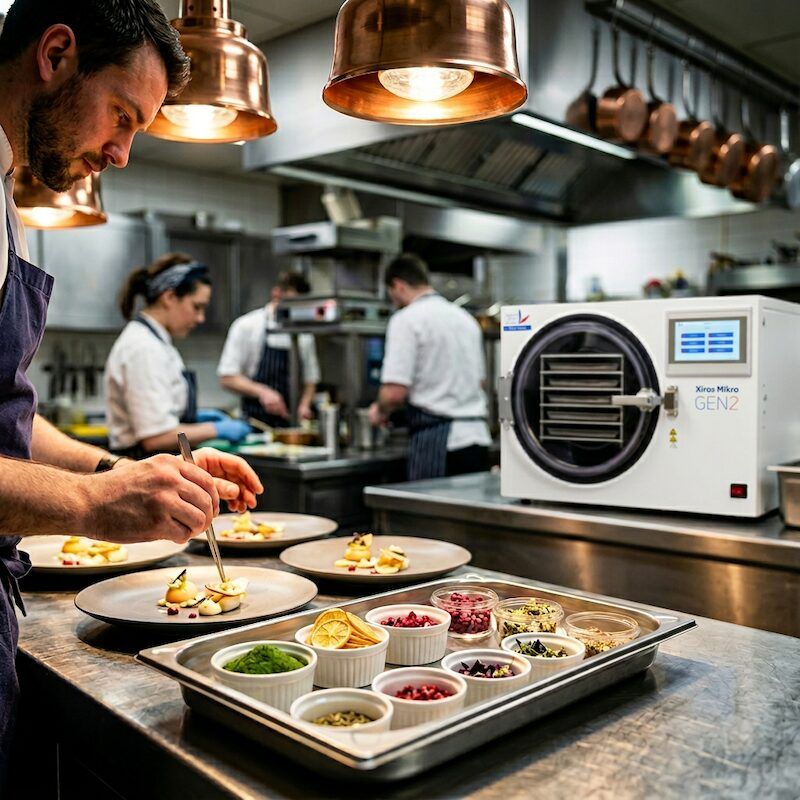
For chefs, product developers and serious food makers, a freeze dryer is not just a storage tool. It is a way to hold onto the best moment of an ingredient and use it later with precision. That can mean flavour concentration. It can mean texture. It can mean flexibility across a menu. It can mean less waste in prep and more room to create.
In the right kitchen, freeze-drying is not a backup plan. It becomes part of the craft.
Freeze-drying at home can lead to more creative cooking
That is one of the reasons home interest matters so much.
People may begin by searching for a freeze-dryer for home use, but they often stay because the method changes what feels possible in the kitchen.
It is practical, yes. But it is also quietly creative.
You can store ingredients from a short bright season and keep working with them later. You can build powders, textures and finishing elements from foods that would otherwise disappear too quickly. You can reduce waste without lowering standards. You can make the pantry more useful and the cooking more interesting at the same time. Dried foods, especially freeze-dried foods, can last 25+ years when stored properly, making them ideal for long-term storage. To ensure this longevity, it is important to package freeze-dried foods quickly and in appropriate containers to prevent moisture absorption. Properly freeze-dried foods must be stored in moisture-proof, hermetically sealed containers to ensure shelf stability. For better organization, always label the container with the type of food, whether it is raw or cooked, and the date prepared.
That balance matters.
Because the strongest food habits are rarely dramatic. They are calm, repeatable and grounded in good sense. Buy well. Preserve well. Waste less. Keep more of what matters.
Food Safety Considerations When Freeze-Drying at Home
When it comes to home freeze drying, food safety is just as important as flavor and shelf life. The freeze drying process can preserve nearly all the nutrition and texture of your favorite foods, but it also requires careful handling to ensure that your freeze dried food remains safe to eat for months or even years.
Start with clean habits. Before you load your freeze dryer, make sure all raw foods—especially meats, eggs, and vegetables—are washed and prepared with clean hands and utensils. Preventing cross-contamination is key, particularly when working with raw meats or eggs. Safe food handling at every step helps protect the final product.
Keep your freeze dryer in top shape. A clean freeze dryer is essential for food safety. Regularly wipe down the dryer exterior and interior, and follow the manufacturer’s instructions for cleaning after each batch. Don’t forget the vacuum pump—changing the vacuum pump oil as recommended keeps the system running smoothly and helps prevent contamination. Or even better, use an oil free pump like the Anemos dry scroll pump (no oil chance and very low maintenance). All proper maintenance ensures that your freeze drying process is as safe as it is effective.
Monitor temperature and vacuum levels. The success of home freeze drying depends on achieving the right temperature and vacuum conditions. These settings are crucial for removing moisture and preventing the growth of bacteria or mold. Make sure your freeze dryer is calibrated and functioning correctly for every batch.
Package with care. Once your dried foods are ready, package them immediately in airtight containers or freeze drying mylar bags with oxygen absorbers. This step locks out moisture and air, extending the shelf life and keeping your freeze dried food safe from spoilage. Mylar bags and oxygen absorbers are especially important for long term food storage.
Store smart. Even the best freeze dried foods can lose quality if exposed to heat, light, or humidity. Store your packages in a cool, dry place to maintain their shelf stable qualities. Proper storage is the final step in effective food preservation.
Rehydrate safely. When it’s time to enjoy your freeze dried meals, especially those containing meats or eggs, always rehydrate and heat them to a safe internal temperature. This ensures any potential bacteria are destroyed, keeping your meals both delicious and safe.
Stay informed. For the latest guidelines and best practices, consult trusted resources like Utah State University Extension and the National Center for Home Food Preservation. These organizations offer detailed advice on the freeze drying process, including primary and secondary drying, packaging, and food safety tips tailored for home freeze drying.
By paying attention to these details—clean handling, equipment care, proper packaging, and safe storage—you can confidently preserve food at home with your freeze dryer. Safe, nutritious, and shelf stable freeze dried food is within reach for any thoughtful home cook.
Why a freeze-dryer at home appeals to serious households
People have become more thoughtful about food storage.
Not louder. Just more thoughtful.
They want better value from expensive ingredients. They want to waste less. They want better habits around planning, preserving and keeping quality close at hand. They want a little more independence from supply shocks, seasonal swings and the general messiness of modern food systems. What they also look for is low noice levels, you don’t want a industrial loud machine in your household. Long term food storage is a key benefit that appeals to many households.
Home freeze dryers can preserve a variety of foods including fruits, vegetables, meats, and dairy products.
That does not need a dramatic label. It is simply sensible.
And that is why interest in the freeze-dryer for home use category keeps making sense. It fits households that already care about food, buy with purpose, and want storage that supports quality instead of working against it.
For one home user, that may mean preserving berries, fish, herbs or batch-cooked meals. For another, it may mean keeping a better pantry. For someone else, it may be the satisfaction of knowing that when good produce appears, there is a way to keep it properly.
The Xiros Mikro GEN2 is very low in noise level just 54 dB(A) witch exeptional when it comes to small freeze dryers avelable on the market and is very acceptable for home use.
Professional kitchens need control, not gimmicks
The professional case is different in tone, but not in principle.
Chefs do not need another machine that looks clever and delivers novelty for a week. They need control. Control over flavour. Control over texture. Control over seasonality. Control over ingredient value.
That is where a reliable freeze dryer earns its place.
The freeze-drying process involves three steps: freezing, primary drying (sublimation), and secondary drying (desorption), allowing for precise control over the final product.
It helps preserve ingredients at their peak. It helps create stable components for service and development. It helps extend the useful life of delicate products without treating them harshly. And in kitchens where ingredients are seasonal, premium or hard won, that matters.
Especially when the aim is not only preservation, but expression.
- A better garnish
- A sharper powder
- A clean crisp texture
- A more flexible mise en place
- A season stretched a little further than usual
That is a serious benefit, not a party trick.
Quality and support matter more than headline price
This should be said plainly.
A proper freeze-dryer is not cheap. And it should not be framed like an impulse purchase.
Too many buying decisions start with the wrong question: what is the lowest price?
That sounds sensible. But for equipment like this, it often leads in the wrong direction.
A freeze dryer is not a casual countertop appliance. Reliability matters. Consistency matters. Service matters. Spare parts matter. Guidance matters. Most freeze dryer units come with oil-based pumps but can be upgraded to oil-free pumps for reduced noise and maintenance. When any of those are weak, the cheap option can become expensive very quickly.
That is true in a restaurant. It is also true when buying a freeze-dryer at home. A home user may use the machine in a different rhythm, but they still need it to work properly, and they still need support that feels real when something needs attention. Proper maintenance includes replacing the vacuum pump oil every 20 to 30 batches, and replacing the oil takes about two minutes.
The Xiros Mikro GEN2 stands out by holding both HACCP and CE certification. With other well-known brands such as Harvest Right, Stay Fresh, Blue Alpine, Prep4Life/The Cube, and various other freeze dryers, this HACCP certification is not stated. For professional use in the food sector, that is a significant difference, as it is not only about performance, but also about demonstrable food safety and process control.
Quality has a price. But so does frustration.
European support is part of what makes a freeze dryer worth buying
Support is not an extra. It is part of the product.
When there are technical people in Europe, shorter communication lines and real product knowledge behind the sale, the whole experience changes. There is more continuity. More trust. Less friction. More confidence that the machine will stay useful long after the first excitement wears off.
For professional kitchens, that can mean smoother workflow and less downtime.
For home users, it means reassurance. And reassurance matters when the machine is meant to become part of daily life, not something that sits in the corner waiting for a problem.
That is one reason better-supported equipment often proves to be the better buy over time.
Good freeze-drying is patient by nature
People sometimes expect speed from a method built around care.
But freeze-drying works because it is gentle. Water is removed in a way that helps preserve much more of the ingredient’s original character. That takes time. Thinner pieces of food will take less time to freeze-dry, and freezing the prepared food in a household freezer for 48 hours before filling the trays may speed up the process.
And honestly, that is part of the appeal.
If you care about flavour, texture and ingredient integrity, patience is not a flaw in the process. It is part of the reason the process works.
The goal is not to move fast for the sake of it. The goal is to preserve what matters.
From freeze-drying at home to a different way of cooking
That may be the biggest shift.
People often begin by thinking about shelf life. Then they start thinking about flavour. They begin with food storage. Then they realise they are changing how they cook.
Food safety is also an important consideration—while freeze-drying preserves food, the freeze-drying process does not kill illness-causing microorganisms, so proper food handling is essential.
They may start by looking for a freeze-dryer that can be used at home. Or for a freeze dryer that can support serious kitchen work. But the long-term value is rarely just about what the machine stores.
It is about what it opens up:
- A better pantry
- Less waste
- More control
- A stronger kitchen rhythm
- An ingredient given a second life
That is when freeze-drying stops being a technical method and becomes something much more useful.
Part of how you cook.